You've been open for a while. You have customers who love you. But when you search for what you do in Bradenton, your business doesn't show up, or it shows up on page three, below competitors you know aren't better than you.
That's one of the most frustrating situations a local business owner can be in. And it's more common than you'd think.
The good news: most of the reasons this happens are fixable. And most of them don't require paying an agency or running ads. They require finding the gap and closing it. If you haven't yet set up your full local marketing presence, start with how to market your business in Bradenton first, then come back here to diagnose what's not working.
Here are the most common reasons Bradenton businesses disappear from Google, and what to do about each one.
At a glance
98% of consumers used used the internet to find local business information in 2024 (BrightLocal).If you're not there, they're calling your competitor
Most local ranking problems trace back to four issues: an incomplete GBP, inconsistent business info, too few reviews, and missing local citations
Businesses with consistent NAP (name, address, phone) across directories see 23% higher local search visibility (KaeRae Marketing)
A Discover Bradenton listing closes two of these gaps in one step
What "showing up on Google" actually means for a local business
Before diagnosing the problem, it helps to know what you're actually trying to appear in. Most local searches produce two types of results: the map pack and the organic results below it.
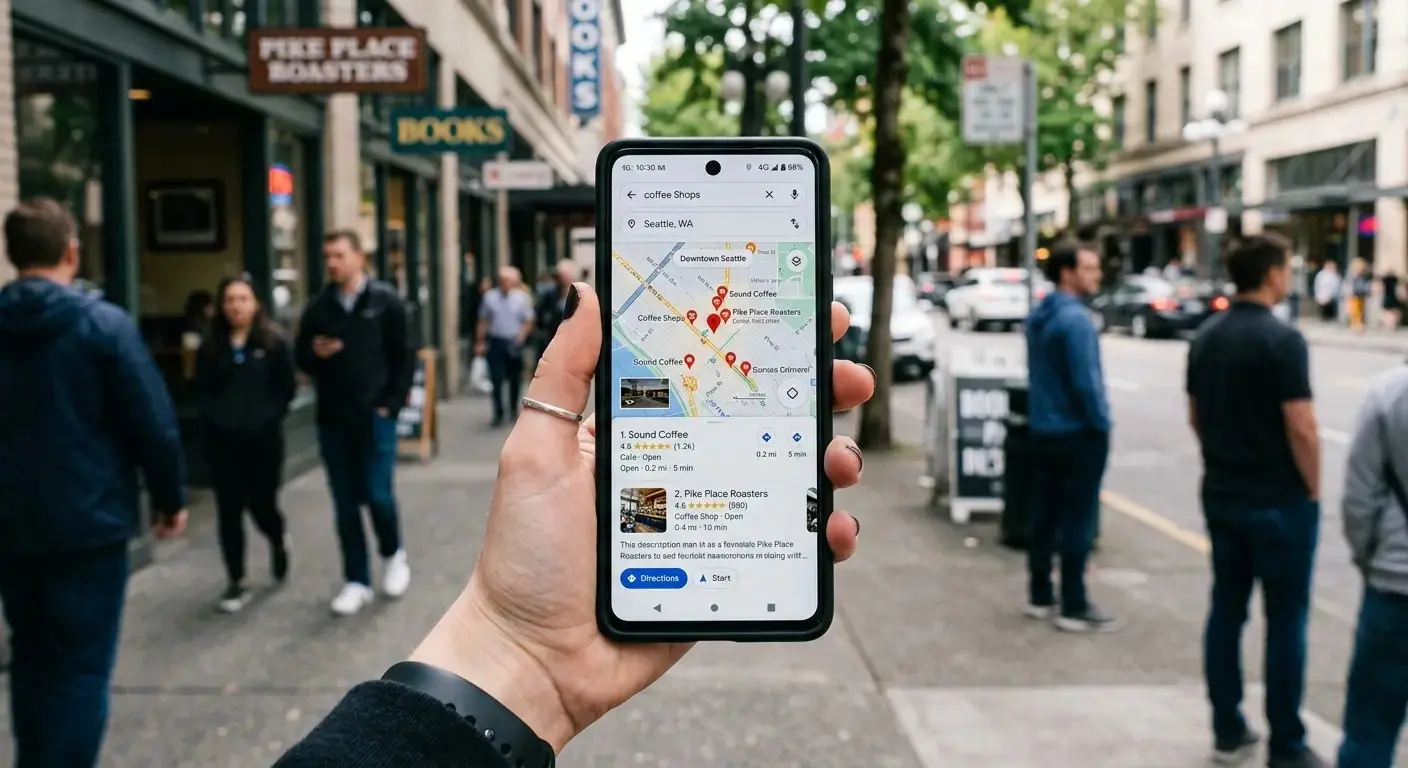
The map pack is the block of three businesses that appears at the top of a local search, with a map pinned to the right. "Restaurants in Bradenton," "plumber near me," "hair salon Bradenton FL," those searches pull up the map pack first. Getting into it is the main goal for most local businesses, because that's where the clicks go.
Below the map pack are organic results, regular website links ranked by SEO. These matter too, but for most local businesses, the map pack is the bigger prize. 88% of consumers who perform a local search on mobile visit or call a business within a week (Backlinko, 2024). Most of those people don't scroll past the map pack.
Is your Google Business Profile incomplete or unclaimed?
This is the most common reason local businesses don't show up, and the easiest to fix. Your Google Business Profile (GBP) is the primary signal Google uses to place you in local search results. If it's unclaimed, incomplete, or stuffed with wrong information, Google doesn't trust it enough to show it.
Go to business.google.com and check your profile. Look for these gaps:
Business name, address, and phone number must be accurate and match what's on your website
Your primary category should match your actual business type. "Restaurant," "Plumber," "Hair salon," not a vague catch-all
Hours need to be filled in, including holiday hours when relevant
Photos matter more than most people realize. Profiles with photos receive 42% more requests for directions and 35% more clicks to websites than those without (Google, 2023)
Posts, services, and a business description round out the profile and give Google more content to index
If your profile says "Claim this business," someone needs to claim it before any of this matters. Go through the verification process, which usually involves a postcard mailed to your address or a phone call.
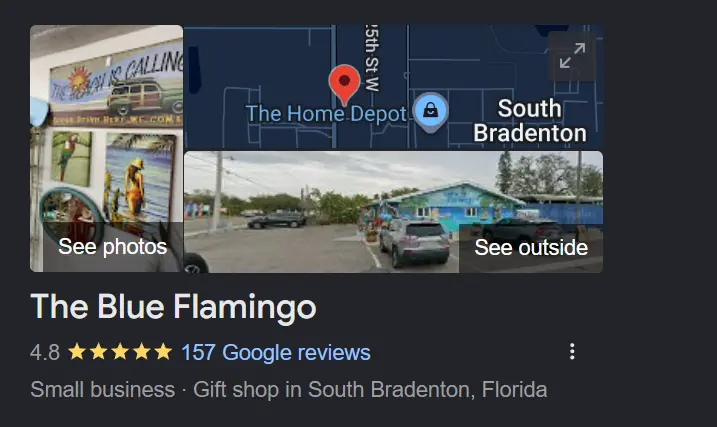
Are your name, address, and phone number consistent everywhere?
This one is invisible to most business owners, but Google pays close attention to it. Your business name, address, and phone number, referred to as NAP in local SEO, need to match exactly across every place they appear online. Your website, your GBP, Yelp, Facebook, and any local directories.
If your GBP says "123 Main St" and your website says "123 Main Street," that small difference is an inconsistency. If your old phone number is still floating around on a directory you set up three years ago, that's a conflict. Google sees these discrepancies and lowers its confidence in your listing.
Businesses with consistent NAP information across directories see 23% higher local search visibility on average (KaeRae Marketing). That's not a rounding error — it's a real measurable gap between businesses that manage this and businesses that don't.
The fix: do an audit. Search your business name and check every result. Look for old addresses, old phone numbers, and name variations. Update or remove what's wrong. Then make sure any new directory listing you create matches your GBP exactly.
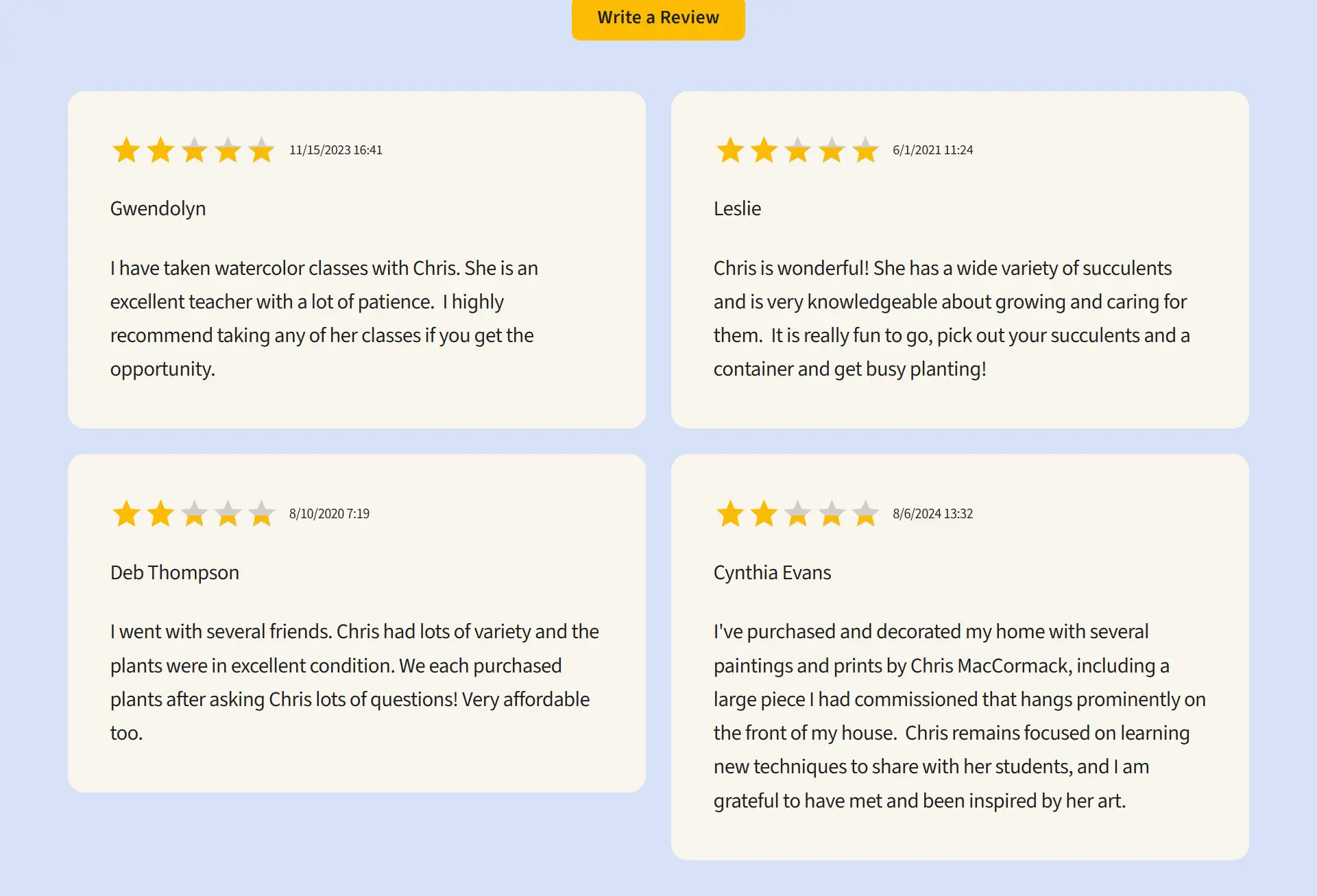
Do you have enough Google reviews, and are they recent?
Reviews are one of the strongest ranking signals in local search. Google uses them to determine two things: how trustworthy your business is, and how active it is. A business with 40 reviews from three years ago ranks worse than a competitor with 25 reviews from the last six months. Recency matters as much as volume.
According to BrightLocal's 2024 consumer survey, 49% of consumers trust online reviews as much as personal recommendations from friends and family (BrightLocal). But a business with zero reviews, or reviews that are years old, sends a signal that the business may not be active, which Google interprets as a reason to rank it lower.
How to fix this: ask for reviews consistently. After a good job, after a repeat purchase, after a thank-you message from a happy customer. Text them a direct link. Put a QR code at your register. A steady drip of reviews, even one or two per month, tells Google this is a live, active business that people keep interacting with. Reviews are also the foundation of building a go-to reputation that makes you the first name locals think of.
Respond to every review. Google counts owner responses as engagement, and it shows potential customers that you're paying attention.
Are you missing from local directories and citation sources?
Google doesn't just look at your GBP and website to decide where to rank you. It looks across the web to verify that your business exists where you say it does. The more trusted sources that mention your business with consistent information, the more confident Google becomes about showing you in local results.
These mentions are called citations, and they come from business directories, local publications, and community sites. Quality directory citations remain among the top five local ranking factors, with 90% of SEO experts considering them important for local search visibility (BrightLocal).
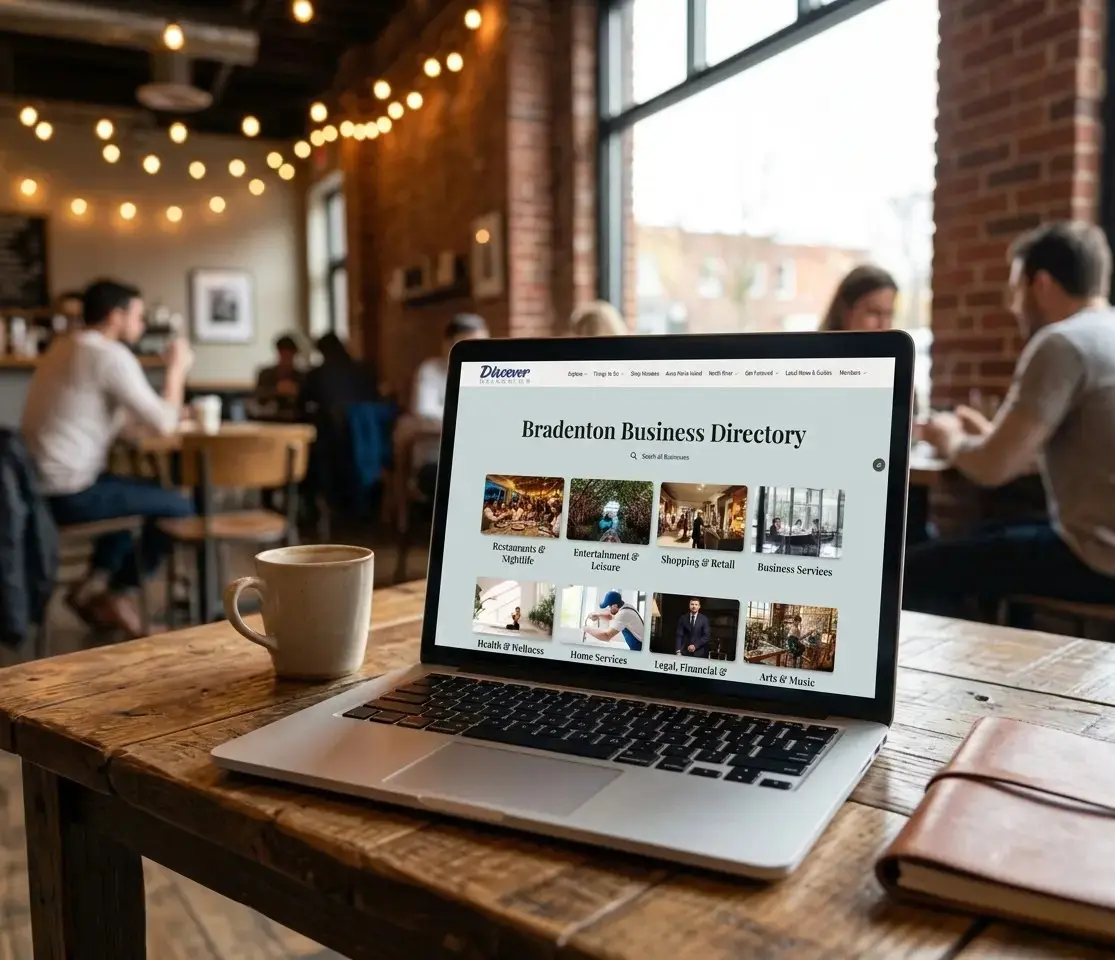
For a Bradenton business, being listed on Discover Bradenton carries more geographic weight than a generic national directory because the site is specifically about this market. When Google sees your business mentioned on a site whose entire focus is Bradenton, alongside your GBP, website, and Yelp listing, it builds a stronger picture of you as a legitimate, locally-rooted business.
Directory backlinks have also become what some SEO professionals call "identity signals". That's the way AI-driven search systems, including Google's AI Overview and ChatGPT, verify that your business is real and where it says it is (Stellar SEO, 2026). Being absent from local directories doesn't just hurt your ranking. It makes you invisible to AI-powered search as well.
Still not sure directory listings are worth the investment? Here's the honest ROI breakdown for 2026.
Is your website missing local signals?
Your website is the second major input Google uses after your GBP. If it doesn't tell Google where you are, it can't help your local ranking, and a vague website actively works against you.
The most common website mistakes for Bradenton businesses:
No city or state in the page title or first paragraph of the homepage
Address only in an image (Google can't read images)
No embedded Google Map on the contact page
No mention of local neighborhoods, landmarks, or the communities you serve
The fix doesn't require a full rebuild. Adding "Bradenton, FL" to your homepage title tag, putting your address in text in the footer, and writing even one paragraph about serving the Bradenton community can make a real difference.
If you serve specific areas, Anna Maria Island, Palmetto, Ellenton, Parrish, mention them. Each area you name is a local signal. Someone searching "HVAC repair Anna Maria Island" will find a business whose website mentions Anna Maria Island before they find one whose website says nothing at all.
Could your category or service mismatch be the problem?
Google matches businesses to searches based on category and services. If you selected the wrong primary category when setting up your GBP, you may be invisible to people searching for exactly what you do.
A restaurant that selected "Food and Beverage" instead of "Restaurant" won't show up in "restaurants near me" searches. A general contractor who selected "Construction Company" instead of "Remodeling Contractor" will miss the searches that actually bring in work.
Check your primary GBP category against what your best customers actually search. If you're unsure, look at which category your top local competitors are using. Google lets you add secondary categories too. Use them to cover the full range of what you do without overstuffing.
How long does it take to fix this?
Some things show results fast. Adding photos to your GBP and claiming your listing can move the needle within days. Getting your NAP consistent across directories takes a few hours of work but starts registering with Google within a few weeks.
Reviews take longer because you can't rush them. But starting to ask consistently now means you'll have traction in 60 to 90 days.
The businesses showing up at the top of Bradenton local search right now built their position over months, not days. The good news is that most of them didn't do anything exotic. They claimed their GBP, kept their information consistent, collected reviews steadily, and made sure they appeared in local directories.
That's the whole playbook. It's not complicated. It just requires doing it.
Frequently asked questions
I've done all of this and I'm still not showing up. What else could it be? A few less-common causes: your business is too new (GBP listings for very new businesses sometimes take 30 to 60 days to rank), you're in a highly competitive category where established businesses have hundreds of reviews, or there's a Google penalty on your listing from a past guideline violation. If you've checked everything on this list and still aren't moving, Discover Bradenton can assist you with your GBP.
Does the distance from the searcher affect whether I show up? Yes. Google local search is heavily influenced by proximity. Where the person is when they search affects which businesses appear. This is one reason consistent local signals (directories, citations, local website content) matter: they help Google understand your service area, not just your address.
Can I show up in Google search without a website? Yes. Your GBP can rank in the map pack without a website. But having a website still matters because it gives Google another source to verify your information, and it gives the people who find your listing somewhere to learn more before they call. Discover Bradenton can assist you in website creation.
Why does my competitor rank above me when they have fewer reviews? Reviews are one signal, but not the only one. Proximity to the searcher, GBP completeness, citation consistency, website authority, and the age of the business listing all factor in. A competitor with fewer reviews but a more complete GBP, more directory listings, and a well-optimized website can outrank a business with more reviews.
Will paying for Google Ads help my organic or map pack ranking? No. Paid ads and organic/local rankings are completely separate systems. Running Google Ads can get you to the top of the page for specific searches, but it doesn't improve your map pack position. The only way to improve your map pack ranking is through the organic signals covered in this article.
Discover Bradenton helps local businesses get found by the residents and tourists already searching in this market.
Ready to close the citation gap and get found by more Bradenton locals? Join the Discover Bradenton Business Network